Pickleball court area and essential factors in pickleball court construction
Pickleball court area plays an important role in building a suitable, safe court that meets competition standards. To ensure efficiency, contractors need to understand the standard dimensions as well as the factors related to pickleball court construction. This article will provide the necessary information about pickleball court area, helping you better understand the process and standards of this type of court.
Standard pickleball court dimensions
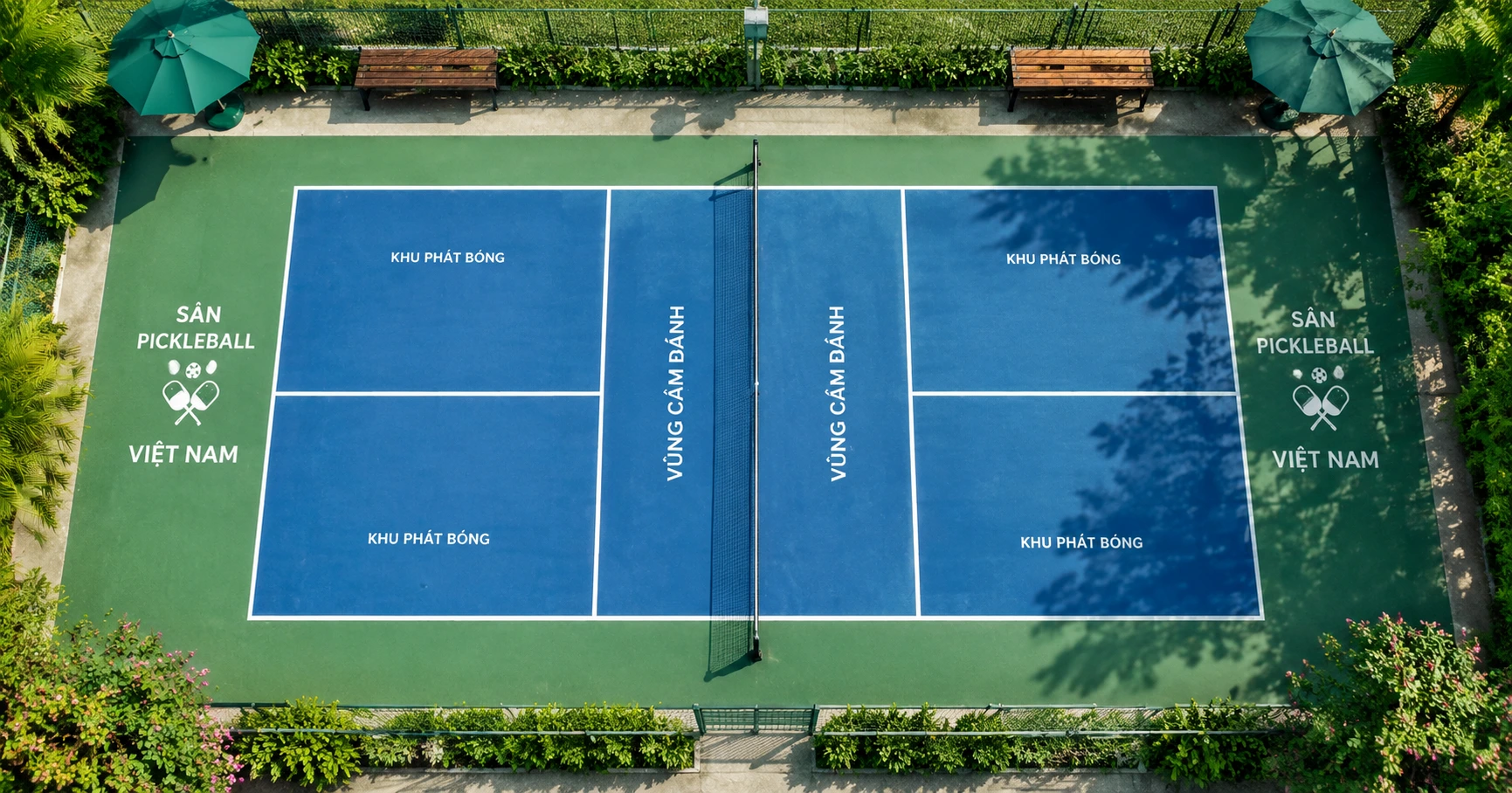
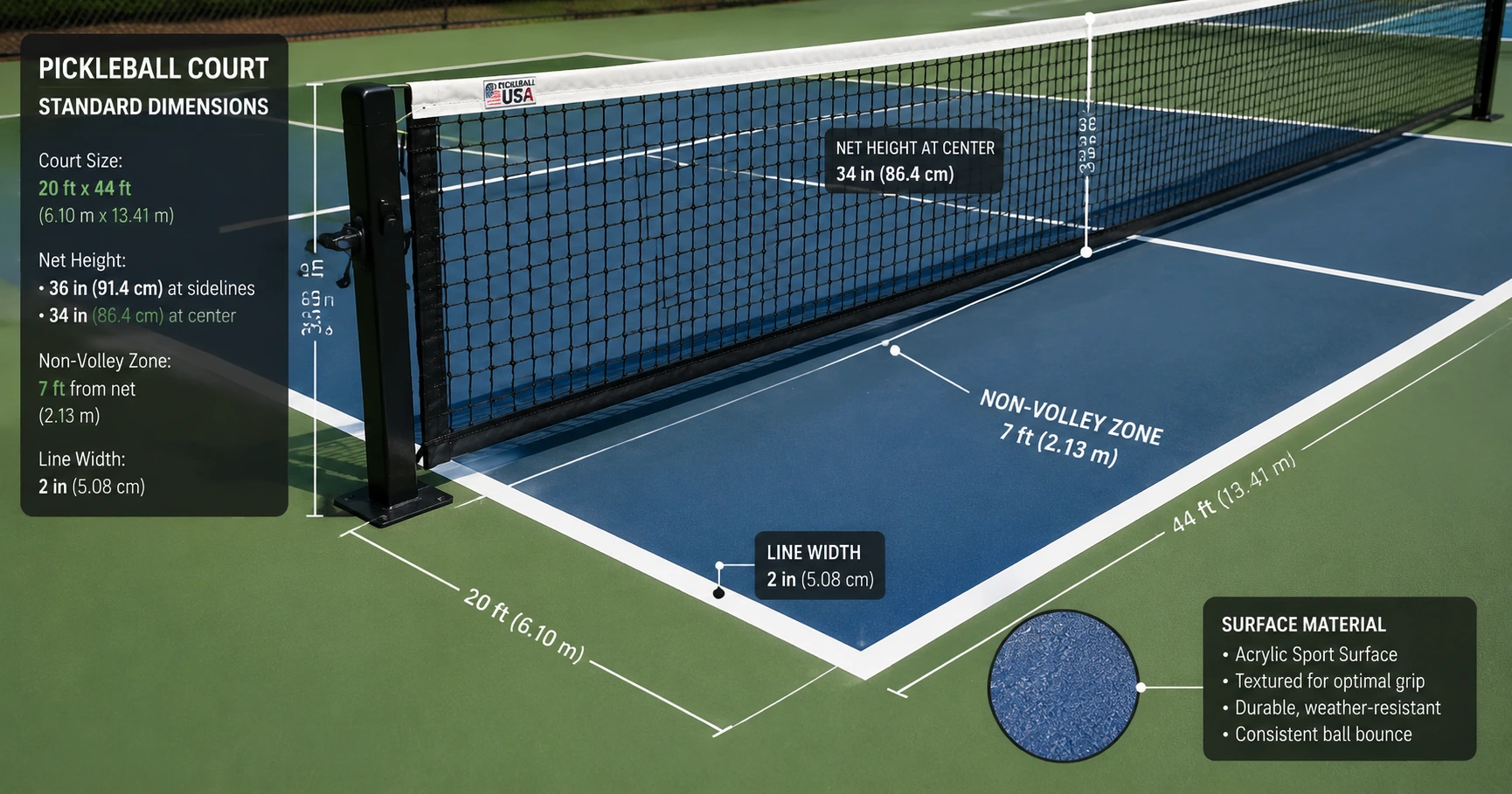
According to the regulations of the International Pickleball Federation, the standard pickleball court area has dimensions of 6.1m x 13.4m, suitable for both competition and practice. Above and below the court, there should also be a minimum open space of 2.4m to ensure safety and convenient movement for players.
Determining sanpickleball is an important step in the process of constructing a standard pickleball court.
You can learn about thapcamtv to know more about standard pickleball court area and the necessary factors in construction.
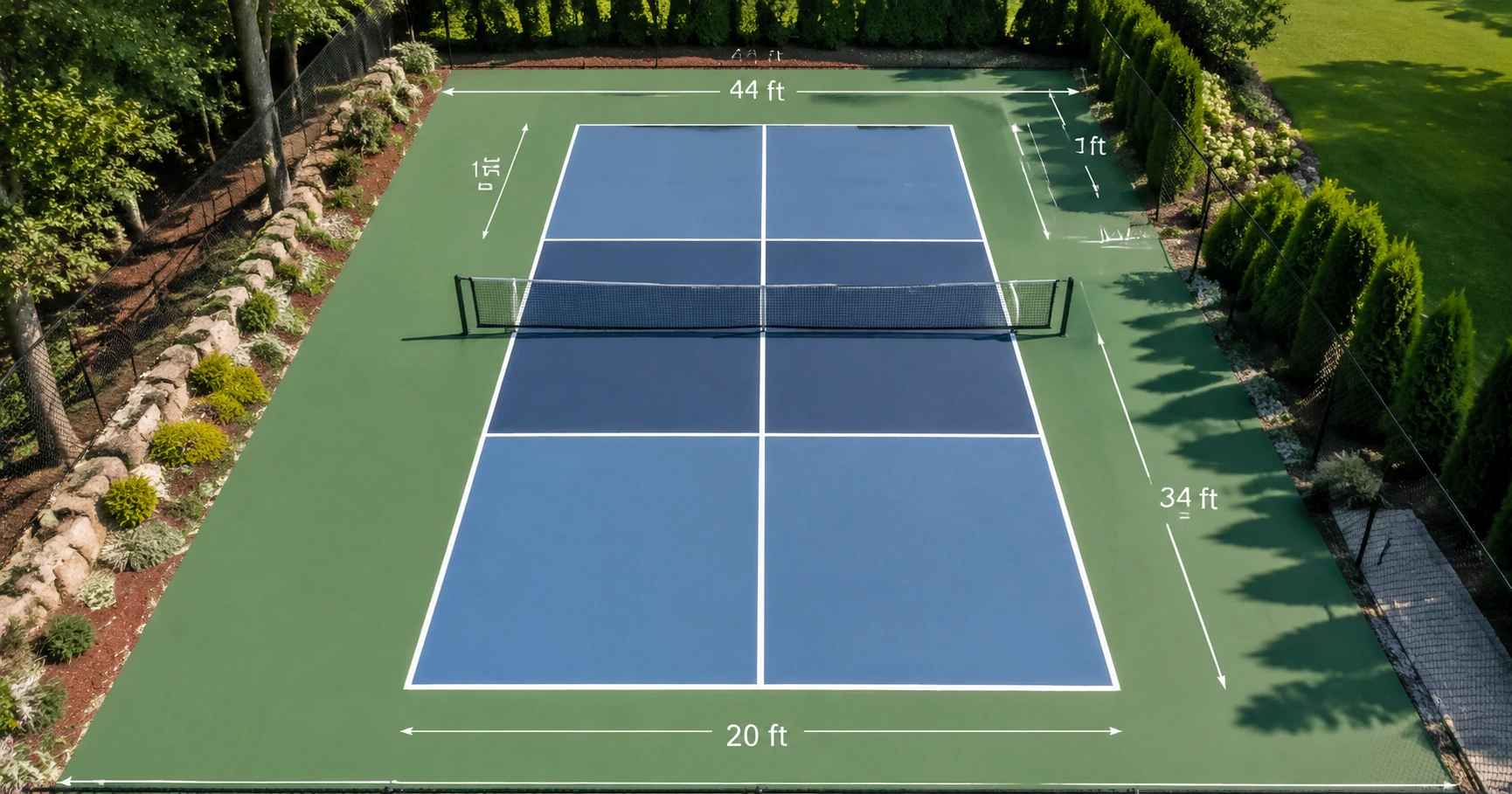
In addition, determining the pickleball court area must also take into account auxiliary areas such as walkways around the court, the net placement position, and the area for referees or spectators if any. This helps the court not only meet technical requirements but also ensure comfort and safety for everyone involved.
| Specification | Dimensions |
|---|---|
| Court length | 13.4 meters |
| Court width | 6.1 meters |
| Upper safety area | 2.4 meters |
| Lower safety area | 2.4 meters |
| Ceiling height (optional) | No specific regulation |
Factors affecting pickleball court area
Not only the standard dimensions, pickleball court area is also affected by many different factors during construction. For example, the site terrain, construction materials, weather conditions, and the intended use of the court (practice or professional competition). These factors need to be carefully considered to ensure the pickleball court achieves the highest quality.
Especially, during the process pickleball court construction, using suitable materials such as court paint, net, net posts, and lighting systems also plays an important role. The pickleball court area needs to be arranged reasonably so that these equipment items operate efficiently, while also creating favorable conditions for players.
Pickleball court construction process
The pickleball court construction requires compliance with technical standards to ensure the court’s quality and durability. This process includes the main steps such as site survey, foundation preparation, court surface installation, and finishing auxiliary items. In particular, the pickleball court area must be clearly determined from the very first step to match international competition standards as well as the local space.
Site survey is the first important step in pickleball court construction, helping determine the most suitable pickleball court area for actual conditions. Then, the foundation is carefully prepared to ensure the court has high durability, avoiding cracking or subsidence during use.
Next is the installation of the court surface with specialized materials, ensuring the court is flat, non-slip, and has suitable elasticity. Finally, auxiliary items such as the net, net posts, court lines, and lighting system are completed to create a complete pickleball court that meets all competition requirements.
The impact of pickleball court area on playing and competition experience
Pickleball court area not only affects players’ mobility but also determines the accuracy and excitement of the match. A court with a suitable area will help limit collisions, improve the competition experience, and ensure fairness for professional tournaments. In addition, a suitable area also helps optimize the process pickleball court construction, reduce construction costs and time.
Choosing the right pickleball court area also helps athletes maximize their technique and tactics in competition. A court that is too small will limit movement space, create pressure, and easily lead to injuries, while a court that is too large will reduce interaction and the pace of the match.
Choosing the right area for different spaces
In construction conditions in urban or residential areas, the pickleball court area can be adjusted to fit the available space, while still ensuring the minimum standards for play and competition. Contractors need to rely on standard size criteria and the investor’s requirements to build a suitable court, ensuring quality and long-term durability.
For example, in areas with limited space, a pickleball court can be designed with minimum dimensions while still ensuring safety zones and other technical standards. Conversely, in spacious areas, the pickleball court area can be expanded to allow for more diverse activities such as group practice or organizing major tournaments.
Summary table of common pickleball court dimensions and areas
| Court type | Dimensions (m) | Area (m²) |
|---|---|---|
| International standard court | 6.1 x 13.4 | 81.74 |
| Practice competition court | 5.5 x 12.0 | 66.0 |
| Mini court (for small spaces) | 5.0 x 11.0 | 55.0 |
The summary of common pickleball court dimensions and areas above will help contractors choose the most suitable option for actual conditions and usage needs. Following standard dimensions not only ensures construction quality but also contributes to improving the player experience.
Thus, understanding pickleball court area and the related factors during the construction process pickleball court construction is a prerequisite for building a quality, sustainable playing court that meets international standards. Hopefully, through this article, you have gained useful knowledge to carry out or choose a suitable pickleball court construction service.